

Contact


CHALLENGES & SOLUTIONS FOR
Municipalities &
Public Sector
From policy ambition to citywide action
Across Europe, municipal and regional leaders are taking decisive steps to combat single-use packaging waste. Street litter increasingly degrades public spaces, while traditional waste management reaches its limits. Takeaway containers consist of contaminated, mixed materials that are virtually impossible to recycle through standard municipal streams.
In response, local authorities are hosting roundtables and launching isolated reuse pilots. However, as legislative mandates tighten, fragmented "reuse islands" fall short. To achieve clean, future-proof public spaces, cities need a standardized, unified circular infrastructure built to scale seamlessly across the entire urban ecosystem.
Intelligent infrastructure for the circular city
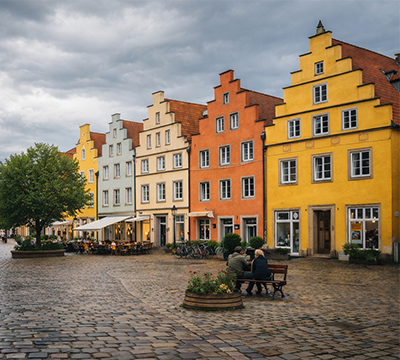
Municipalities across Europe are deploying ambitious regulatory tools, from local packaging taxes to mandatory reuse obligations, to curb single-use waste. When circular systems succeed, the benefits for the community are immediate: cleaner public spaces, lower waste management expenses, and a resilient local economy.
However, policy alone cannot clean a city. Moving from legislation to street-level success requires an operational foundation capable of handling real urban volume. By uniting local businesses, public return points, automated logistics, and digital clearing into a single ecosystem, we provide the turnkey infrastructure that turns ambitious municipal mandates into clean, functioning urban reality.
From waste management to reuse systems
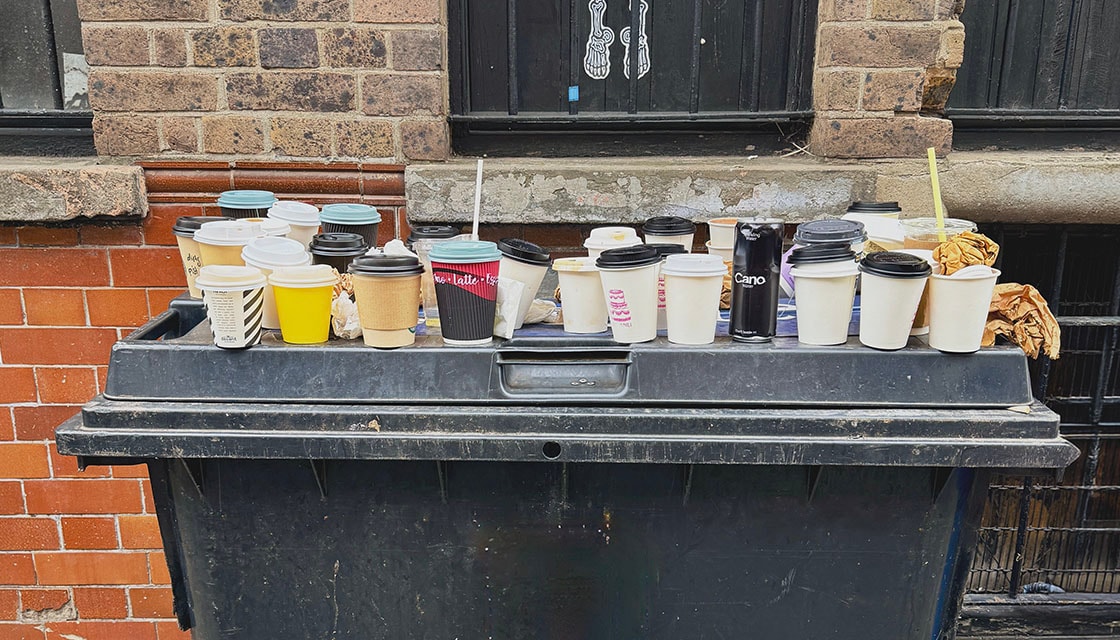
Municipal spending on public waste management is staggering. In Berlin alone, nearly 2,000 sanitation staff and a massive fleet of vehicles service over 27,000 public bins, only for vast quantities of single-use takeaway packaging to be collected and incinerated.
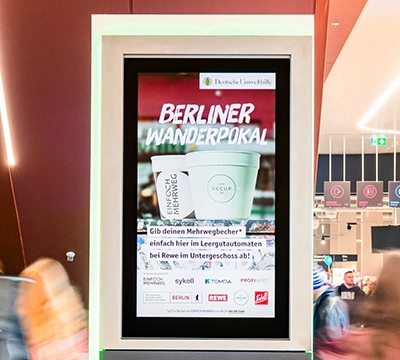
True urban sustainability requires moving past fragmented, siloed pilots to build a shared municipal infrastructure. By integrating reusable packaging collection directly into existing public cleaning routines, cities can transform waste management costs into circular value. As demonstrated in Berlin, where multiple operators successfully leveraged the shared infrastructure of the EINFACH MEHRWEG ecosystem, a unified, multi-system approach is no longer just a theoretical concept, it’s a proven reality.
We solve your challenges with our Operating Model. Learn more:


Contact
CHALLENGES & SOLUTIONS FOR
Municipalities &
Public Sector
From policy ambition to citywide action
Across Europe, municipal and regional leaders are taking decisive steps to combat single-use packaging waste. Street litter increasingly degrades public spaces, while traditional waste management reaches its limits. Takeaway containers consist of contaminated, mixed materials that are virtually impossible to recycle through standard municipal streams.
In response, local authorities are hosting roundtables and launching isolated reuse pilots. However, as legislative mandates tighten, fragmented "reuse islands" fall short. To achieve clean, future-proof public spaces, cities need a standardized, unified circular infrastructure built to scale seamlessly across the entire urban ecosystem.
Intelligent infrastructure for the circular city
Municipalities across Europe are deploying ambitious regulatory tools, from local packaging taxes to mandatory reuse obligations, to curb single-use waste. When circular systems succeed, the benefits for the community are immediate: cleaner public spaces, lower waste management expenses, and a resilient local economy.
However, policy alone cannot clean a city. Moving from legislation to street-level success requires an operational foundation capable of handling real urban volume. By uniting local businesses, public return points, automated logistics, and digital clearing into a single ecosystem, we provide the turnkey infrastructure that turns ambitious municipal mandates into clean, functioning urban reality.
From waste management to reuse systems
Municipal spending on public waste management is staggering. In Berlin alone, nearly 2,000 sanitation staff and a massive fleet of vehicles service over 27,000 public bins, only for vast quantities of single-use takeaway packaging to be collected and incinerated.
True urban sustainability requires moving past fragmented, siloed pilots to build a shared municipal infrastructure. By integrating reusable packaging collection directly into existing public cleaning routines, cities can transform waste management costs into circular value. As demonstrated in Berlin, where multiple operators successfully leveraged the shared infrastructure of the EINFACH MEHRWEG ecosystem, a unified, multi-system approach is no longer just a theoretical concept, it’s a proven reality.
We solve your challenges with our Operating Model. Learn more:


EN
Contact
CHALLENGES & SOLUTIONS FOR
Municipalities &
Public Sector
From policy ambition to citywide action
Across Europe, municipal and regional leaders are taking decisive steps to combat single-use packaging waste. Street litter increasingly degrades public spaces, while traditional waste management reaches its limits. Takeaway containers consist of contaminated, mixed materials that are virtually impossible to recycle through standard municipal streams.
In response, local authorities are hosting roundtables and launching isolated reuse pilots. However, as legislative mandates tighten, fragmented "reuse islands" fall short. To achieve clean, future-proof public spaces, cities need a standardized, unified circular infrastructure built to scale seamlessly across the entire urban ecosystem.
Intelligent infrastructure for the circular city
Municipalities across Europe are deploying ambitious regulatory tools, from local packaging taxes to mandatory reuse obligations, to curb single-use waste. When circular systems succeed, the benefits for the community are immediate: cleaner public spaces, lower waste management expenses, and a resilient local economy.
However, policy alone cannot clean a city. Moving from legislation to street-level success requires an operational foundation capable of handling real urban volume. By uniting local businesses, public return points, automated logistics, and digital clearing into a single ecosystem, we provide the turnkey infrastructure that turns ambitious municipal mandates into clean, functioning urban reality.
From waste management to reuse systems
Municipal spending on public waste management is staggering. In Berlin alone, nearly 2,000 sanitation staff and a massive fleet of vehicles service over 27,000 public bins, only for vast quantities of single-use takeaway packaging to be collected and incinerated.
True urban sustainability requires moving past fragmented, siloed pilots to build a shared municipal infrastructure. By integrating reusable packaging collection directly into existing public cleaning routines, cities can transform waste management costs into circular value. As demonstrated in Berlin, where multiple operators successfully leveraged the shared infrastructure of the EINFACH MEHRWEG ecosystem, a unified, multi-system approach is no longer just a theoretical concept, it’s a proven reality.
We solve your challenges with our Operating Model. Learn more:
EN
Contact
CHALLENGES & SOLUTIONS FOR
Municipalities &
Public Sector
From policy ambition to citywide action
Across Europe, municipal and regional leaders are taking decisive steps to combat single-use packaging waste. Street litter increasingly degrades public spaces, while traditional waste management reaches its limits. Takeaway containers consist of contaminated, mixed materials that are virtually impossible to recycle through standard municipal streams.
In response, local authorities are hosting roundtables and launching isolated reuse pilots. However, as legislative mandates tighten, fragmented "reuse islands" fall short. To achieve clean, future-proof public spaces, cities need a standardized, unified circular infrastructure built to scale seamlessly across the entire urban ecosystem.
Intelligent infrastructure for the circular city
Municipalities across Europe are deploying ambitious regulatory tools, from local packaging taxes to mandatory reuse obligations, to curb single-use waste. When circular systems succeed, the benefits for the community are immediate: cleaner public spaces, lower waste management expenses, and a resilient local economy.
However, policy alone cannot clean a city. Moving from legislation to street-level success requires an operational foundation capable of handling real urban volume. By uniting local businesses, public return points, automated logistics, and digital clearing into a single ecosystem, we provide the turnkey infrastructure that turns ambitious municipal mandates into clean, functioning urban reality.
From waste management to reuse systems
Municipal spending on public waste management is staggering. In Berlin alone, nearly 2,000 sanitation staff and a massive fleet of vehicles service over 27,000 public bins, only for vast quantities of single-use takeaway packaging to be collected and incinerated.
True urban sustainability requires moving past fragmented, siloed pilots to build a shared municipal infrastructure. By integrating reusable packaging collection directly into existing public cleaning routines, cities can transform waste management costs into circular value. As demonstrated in Berlin, where multiple operators successfully leveraged the shared infrastructure of the EINFACH MEHRWEG ecosystem, a unified, multi-system approach is no longer just a theoretical concept, it’s a proven reality.
We solve your challenges with our Operating Model. Learn more: