

Contact

Resources

Impact of reuse
Impact of Reuse
Reuse is a system solution
Reuse is more than a packaging solution. It is a solution to support the circular economy, reuse enables the transition from linear value chains. It closes loops where resources are reuse rather than lost. In doing so, reuse addresses multiple ecological challenges simultaneously. Resources are conserved and waste is avoided along the entire value chain. (Reusable Packaging Association)
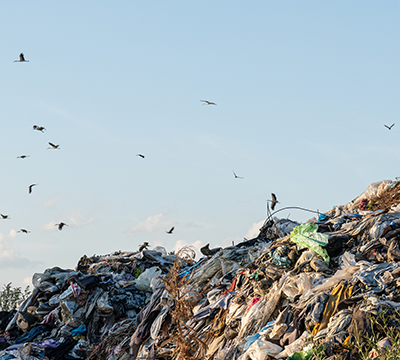
We are drowning in single-use waste
177.8 kg
In 2023, the average amount of packaging waste generated per person in the EU was (Eurostat).
1.6 %
of the 14.8 billion to-go packaging units in 2023 in Germany were reusable (WWF DE, 2024)
79%
of the plastics produced between 2015 and 2050 ended up in landfills or in the environment (Geyer et al., 2017).
32 %
of plastic waste in Germany was recycled into new products in 2023 (BKV, 2024).
Single-use recycling is not the solution
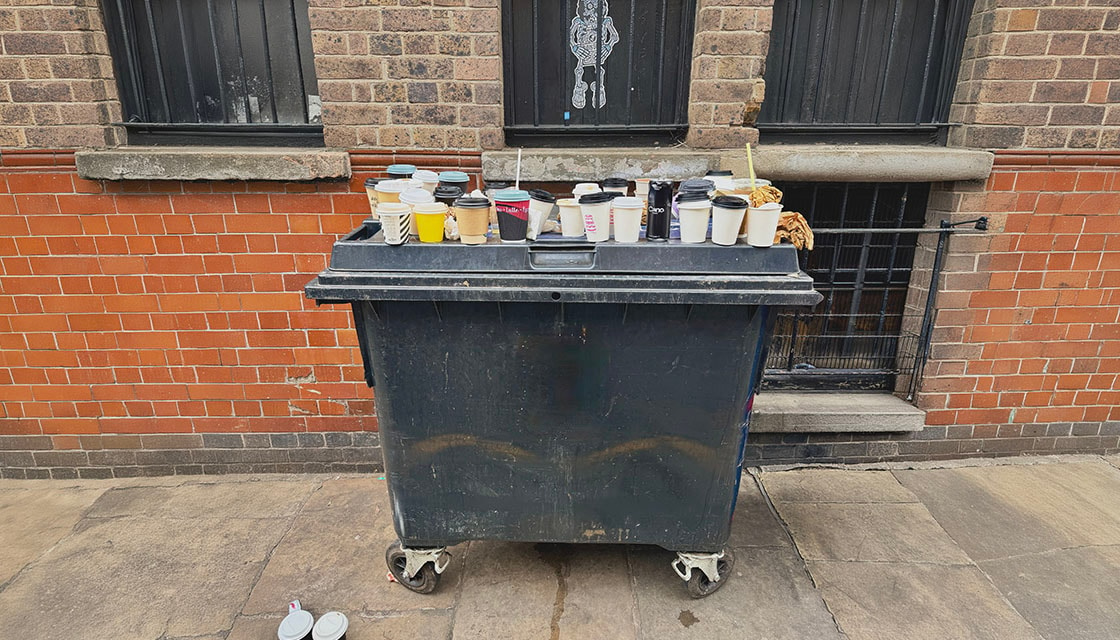
While recycling is widely seen as the answer to our waste crisis, the reality is that most materials are downcycled or incinerated. Reuse offers a true circular solution: keeping packaging in active circulation and eliminating waste at the source.
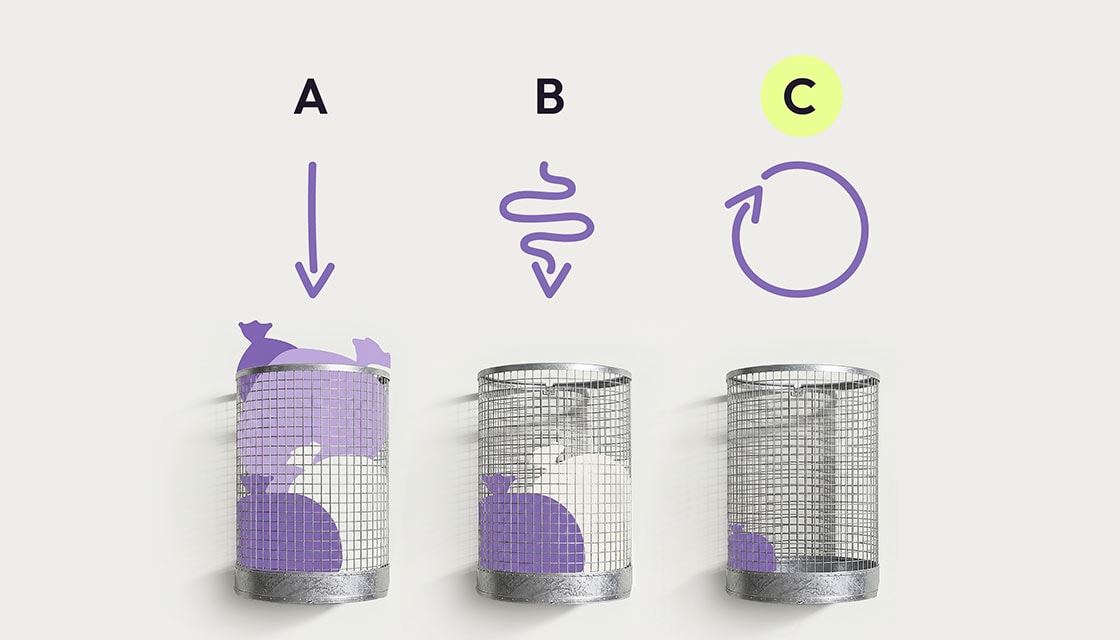
Image: Without reuse and recycling, a large amount of waste is produced, which must be incinerated or landfilled (A). If part of the waste is recycled, the amount decreases (B). If products are reused as long as possible and recycled at the end, the least waste is produced (C).
When does reuse make ecological sense?
Mehrweg works through active participation. The more often a piece of packaging is used, the lower the consumption of resources per use.
High return rate:
Only returned packaging can be used multiple times
High number of uses:
With each reuse, the ecological footprint per packaging unit decreases
High acceptance:
A simple system increases participation and returns
Meaningful areas of application:
Reuse has the fastest impact when material-intensive packaging is replaced (plastic, aluminum, or glass)
Low-material product design:
A resource-efficient design reduces material use and packaging weight
Efficient logistics:
Short transport routes, bundled reverse logistics, and lightweight packaging additionally reduce emissions
Less resource consumption through reuse
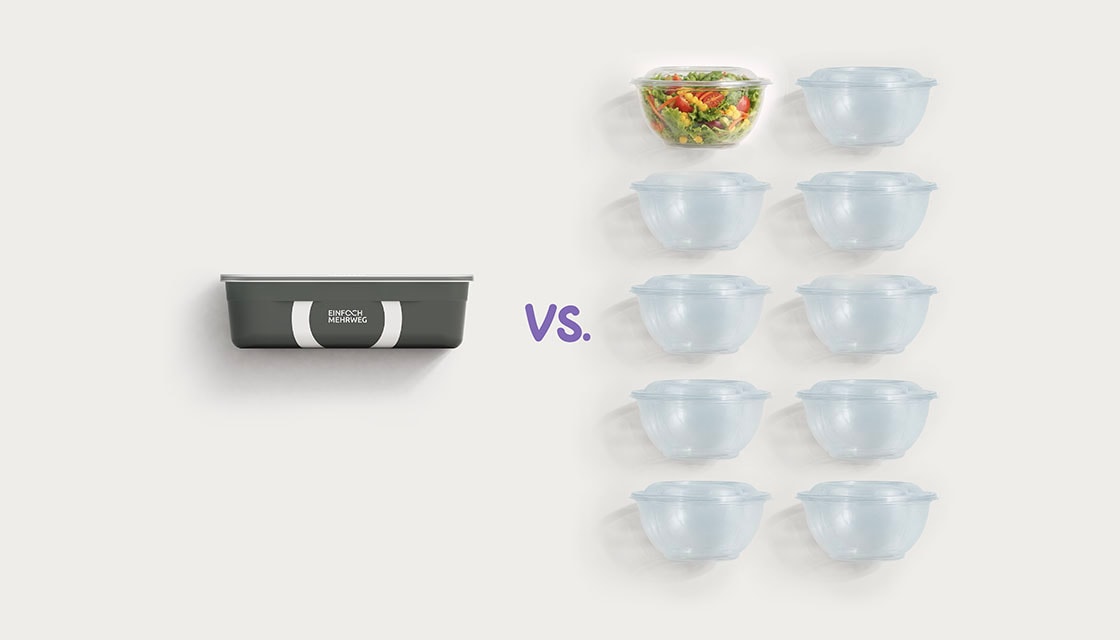
Reusable packaging causes up to 89% less waste compared to single-use across the entire lifecycle (at 30 uses)*. In some cases, less material and resources are used after just two uses.*Based on the life cycle assessment of EINFACH MEHRWEG To-Go verified by Bureau Veritas (compliant with ISO 14040 and ISO 14044): a comparison of 30 reuses with 30 single-use packaging items in the same use case. Critical review

AI assisted
Less CO₂e emissions from
Sykell Prefill
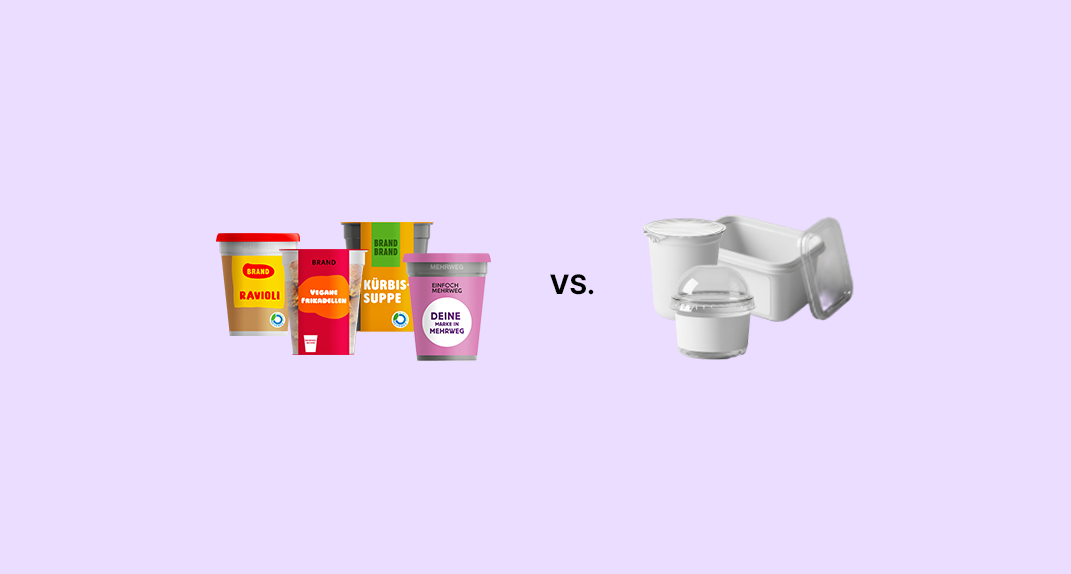
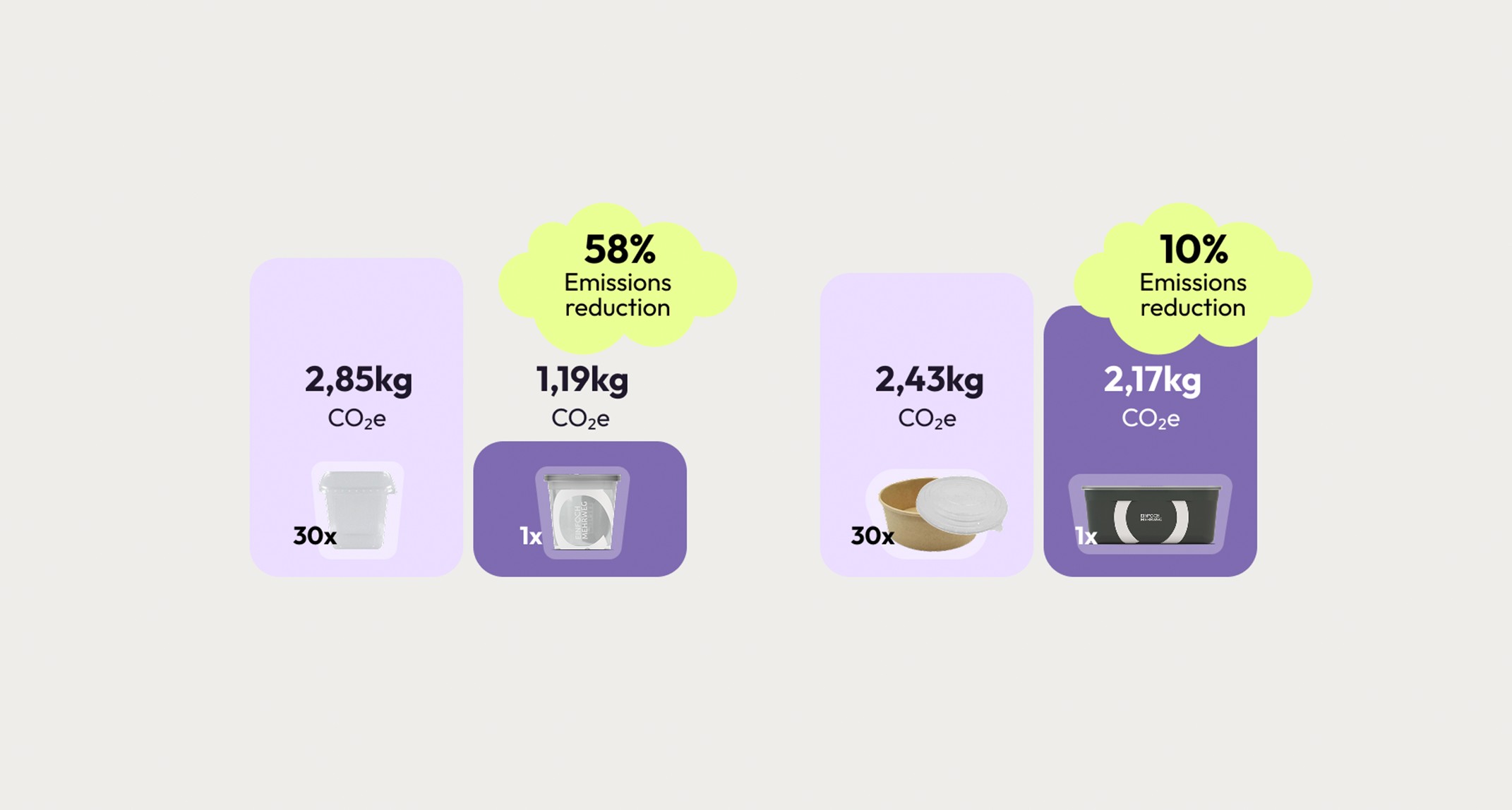
Compared with semi-rigid and rigid single-use packaging, EINFACH MEHRWEG Prefill reduces greenhouse gas emissions after just 2 to 8 uses. Fundamentally, the climate impact depends on the type of single-use packaging being replaced by reusable packaging.**Based on internal calculation using our ISO 14040/14044 compliant Product Carbon Footprint Tool. The tool has been verified by Re-Viu [Technical Validation]. More information about the tool here.
Less CO₂e emissions from
Sykell TO-GO
After three uses, Sykell To-Go on average causes less CO₂e emissions than single-use plastic packaging, and after 14 uses less than paper packaging.**Based on the life cycle assessment of EINFACH MEHRWEG To-Go verified by Bureau Veritas (compliant with ISO 14040 & ISO 14044): a comparison of 30 reuses with 30 single-use packaging items in the same use case. [Sykell Life Cycle Assessment] [Critical Review]
Go circular to protect our environment
Reuse works: Reuse systems reduce waste and water consumption after just a few uses and reach their full CO2e savings potential at scale.
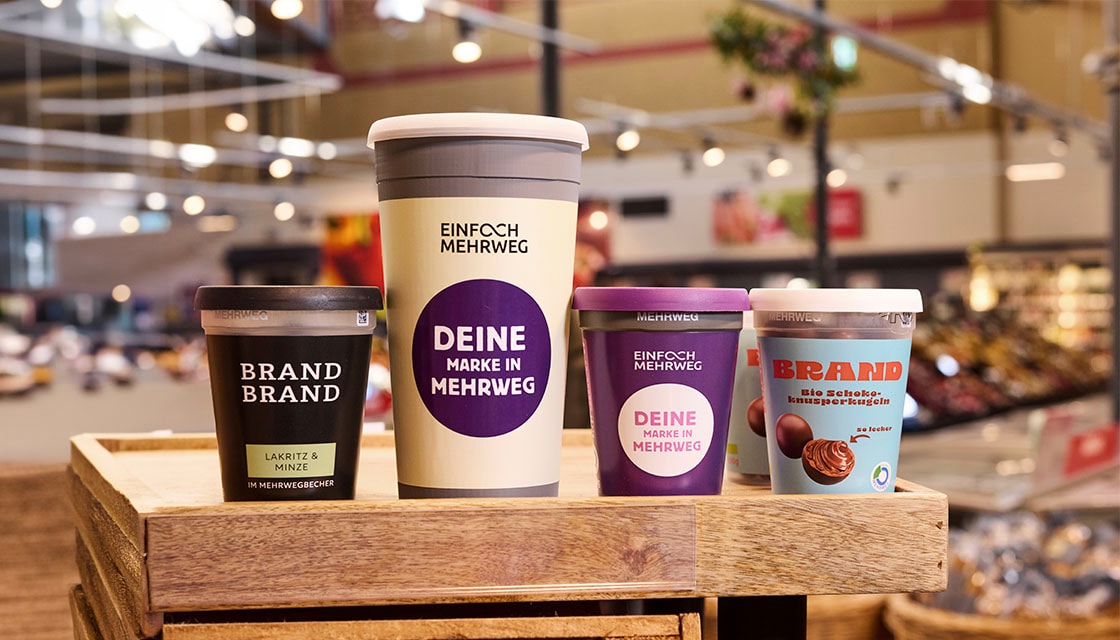
Pre-packaged food:
We'd be happy to calculate the CO₂e savings potential for you using our Product Carbon Footprint tool.
Impact at Sykell
Learn how we continuously strengthen sustainability of our products and in our company.
Contact
Resources
Impact of reuse
Impact of Reuse
Reuse is a system solution
Reuse is more than a packaging solution. It is a solution to support the circular economy, reuse enables the transition from linear value chains. It closes loops where resources are reuse rather than lost. In doing so, reuse addresses multiple ecological challenges simultaneously. Resources are conserved and waste is avoided along the entire value chain. (Reusable Packaging Association)
We are drowning in single-use waste
177.8 kg
In 2023, the average amount of packaging waste generated per person in the EU was (Eurostat).
1.6 %
of the 14.8 billion to-go packaging units in 2023 in Germany were reusable (WWF DE, 2024)
79%
of the plastics produced between 2015 and 2050 ended up in landfills or in the environment (Geyer et al., 2017).
32 %
of plastic waste in Germany was recycled into new products in 2023 (BKV, 2024).
Single-use recycling is not the solution
While recycling is widely seen as the answer to our waste crisis, the reality is that most materials are downcycled or incinerated. Reuse offers a true circular solution: keeping packaging in active circulation and eliminating waste at the source.
Image: Without reuse and recycling, a large amount of waste is produced, which must be incinerated or landfilled (A). If part of the waste is recycled, the amount decreases (B). If products are reused as long as possible and recycled at the end, the least waste is produced (C).
When does reuse make ecological sense?
Mehrweg works through active participation. The more often a piece of packaging is used, the lower the consumption of resources per use.
High return rate:
Only returned packaging can be used multiple times
High number of uses:
With each reuse, the ecological footprint per packaging unit decreases
High acceptance:
A simple system increases participation and returns
Meaningful areas of application:
Reuse has the fastest impact when material-intensive packaging is replaced (plastic, aluminum, or glass)
Low-material product design:
A resource-efficient design reduces material use and packaging weight
Efficient logistics:
Short transport routes, bundled reverse logistics, and lightweight packaging additionally reduce emissions
Less resource consumption through reuse
Reusable packaging causes up to 89% less waste compared to single-use across the entire lifecycle (at 30 uses)*. In some cases, less material and resources are used after just two uses.*Based on the life cycle assessment of EINFACH MEHRWEG To-Go verified by Bureau Veritas (compliant with ISO 14040 and ISO 14044): a comparison of 30 reuses with 30 single-use packaging items in the same use case. Critical review
AI assisted
Less CO₂e emissions from
Sykell Prefill
Compared with semi-rigid and rigid single-use packaging, EINFACH MEHRWEG Prefill reduces greenhouse gas emissions after just 2 to 8 uses. Fundamentally, the climate impact depends on the type of single-use packaging being replaced by reusable packaging.**Based on internal calculation using our ISO 14040/14044 compliant Product Carbon Footprint Tool. The tool has been verified by Re-Viu [Technical Validation]. More information about the tool here.
Less CO₂e emissions from
Sykell TO-GO
After three uses, Sykell To-Go on average causes less CO₂e emissions than single-use plastic packaging, and after 14 uses less than paper packaging.**Based on the life cycle assessment of EINFACH MEHRWEG To-Go verified by Bureau Veritas (compliant with ISO 14040 & ISO 14044): a comparison of 30 reuses with 30 single-use packaging items in the same use case. [Sykell Life Cycle Assessment] [Critical Review]
Go circular to protect our environment
Reuse works: Reuse systems reduce waste and water consumption after just a few uses and reach their full CO2e savings potential at scale.
Pre-packaged food:
We'd be happy to calculate the CO₂e savings potential for you using our Product Carbon Footprint tool.
Impact bei Sykell!
Learn how we continuously strengthen sustainability of our products and in our company.


EN
Contact
Resources
Impact of reuse
Impact of Reuse
Reuse is a system solution
Reuse is more than a packaging solution. It is a solution to support the circular economy, reuse enables the transition from linear value chains. It closes loops where resources are reuse rather than lost. In doing so, reuse addresses multiple ecological challenges simultaneously. Resources are conserved and waste is avoided along the entire value chain. (Reusable Packaging Association)
We are drowning in single-use waste
177.8 kg
In 2023, the average amount of packaging waste generated per person in the EU was (Eurostat).
1.6 %
of the 14.8 billion to-go packaging units in 2023 in Germany were reusable (WWF DE, 2024)
79%
of the plastics produced between 2015 and 2050 ended up in landfills or in the environment (Geyer et al., 2017).
32 %
des Post-Consumer-Kunststoffabfalls wird in Deutschland zu neuen Produkten recycelt (lt. Heinrich Böll Stiftung, 2021).
Single-use recycling is not the solution
While recycling is widely seen as the answer to our waste crisis, the reality is that most materials are downcycled or incinerated. Reuse offers a true circular solution: keeping packaging in active circulation and eliminating waste at the source.
Image: Without reuse and recycling, a large amount of waste is produced, which must be incinerated or landfilled (A). If part of the waste is recycled, the amount decreases (B). If products are reused as long as possible and recycled at the end, the least waste is produced (C).
When does reuse make ecological sense?
Mehrweg works through active participation. The more often a piece of packaging is used, the lower the consumption of resources per use.
High return rate:
Only returned packaging can be used multiple times
High number of uses:
With each reuse, the ecological footprint per packaging unit decreases
High acceptance:
A simple system increases participation and returns
Meaningful areas of application:
Reuse has the fastest impact when material-intensive packaging is replaced (plastic, aluminum, or glass)
Low-material product design:
A resource-efficient design reduces material use and packaging weight
Efficient logistics:
Short transport routes, bundled reverse logistics, and lightweight packaging additionally reduce emissions
Less resource consumption through reuse
Reusable packaging causes up to 89% less waste compared to single-use across the entire lifecycle (at 30 uses)*. In some cases, less material and resources are used after just two uses.*Based on the life cycle assessment of EINFACH MEHRWEG To-Go verified by Bureau Veritas (compliant with ISO 14040 and ISO 14044): a comparison of 30 reuses with 30 single-use packaging items in the same use case. Critical review

AI assisted
Less CO₂e emissions from
Sykell Prefill
Compared with semi-rigid and rigid single-use packaging, EINFACH MEHRWEG Prefill reduces greenhouse gas emissions after just 2 to 8 uses. Fundamentally, the climate impact depends on the type of single-use packaging being replaced by reusable packaging.**Based on internal calculation using our ISO 14040/14044 compliant Product Carbon Footprint Tool. The tool has been verified by Re-Viu [Technical Validation]. More information about the tool here.
Less CO₂e emissions from
Sykell TO-GO
After three uses, Sykell To-Go on average causes less CO₂e emissions than single-use plastic packaging, and after 14 uses less than paper packaging.**Based on the life cycle assessment of EINFACH MEHRWEG To-Go verified by Bureau Veritas (compliant with ISO 14040 & ISO 14044): a comparison of 30 reuses with 30 single-use packaging items in the same use case. [Sykell Life Cycle Assessment] [Critical Review]
Go circular to protect our environment
Reuse works: Reuse systems reduce waste and water consumption after just a few uses and reach their full CO2e savings potential at scale.
Pre-packaged food:
We'd be happy to calculate the CO₂e savings potential for you using our Product Carbon Footprint tool.
Impact at Sykell
Learn how we continuously strengthen sustainability of our products and in our company.
EN
Contact
Resources
Impact of reuse
Impact of Reuse
Reuse is a system solution
Reuse is more than a packaging solution. It is a solution to support the circular economy, reuse enables the transition from linear value chains. It closes loops where resources are reuse rather than lost. In doing so, reuse addresses multiple ecological challenges simultaneously. Resources are conserved and waste is avoided along the entire value chain. (Reusable Packaging Association)
We are drowning in single-use waste
177.8 kg
In 2023, the average amount of packaging waste generated per person in the EU was (Eurostat).
1.6 %
of the 14.8 billion to-go packaging units in 2023 in Germany were reusable (WWF DE, 2024)
79%
of the plastics produced between 2015 and 2050 ended up in landfills or in the environment (Geyer et al., 2017).
32 %
of plastic waste in Germany was recycled into new products in 2023 (BKV, 2024).
Single-use recycling is not the solution
While recycling is widely seen as the answer to our waste crisis, the reality is that most materials are downcycled or incinerated. Reuse offers a true circular solution: keeping packaging in active circulation and eliminating waste at the source.
Image: Without reuse and recycling, a large amount of waste is produced, which must be incinerated or landfilled (A). If part of the waste is recycled, the amount decreases (B). If products are reused as long as possible and recycled at the end, the least waste is produced (C).
When does reuse make ecological sense?
Mehrweg works through active participation. The more often a piece of packaging is used, the lower the consumption of resources per use.
High return rate:
Only returned packaging can be used multiple times
High number of uses:
With each reuse, the ecological footprint per packaging unit decreases
High acceptance:
A simple system increases participation and returns
Meaningful areas of application:
Reuse has the fastest impact when material-intensive packaging is replaced (plastic, aluminum, or glass)
Low-material product design:
A resource-efficient design reduces material use and packaging weight
Efficient logistics:
Short transport routes, bundled reverse logistics, and lightweight packaging additionally reduce emissions
Less resource consumption through reuse
Reusable packaging causes up to 89% less waste compared to single-use across the entire lifecycle (at 30 uses)*. In some cases, using an item just three times results in lower consumption of materials, resources, and water. The production of raw materials is generally much more water-intensive than washing*
*Based on the life cycle assessment of EINFACH MEHRWEG To-Go verified by Bureau Veritas (compliant with ISO 14040 and ISO 14044): a comparison of 30reuses with 30 single-use packaging items in the same use case. Critical review
AI assisted
Less CO₂e emissions from
Sykell Prefill
Compared with semi-rigid and rigid single-use packaging, EINFACH MEHRWEG Prefill reduces greenhouse gas emissions after just 2 to 8 uses. Fundamentally, the climate impact depends on the type of single-use packaging being replaced by reusable packaging.**Based on internal calculation using our ISO 14040/14044 compliant Product Carbon Footprint Tool. The tool has been verified by Re-Viu [Technical Validation]. More information about the tool here.
Less CO₂e emissions from
Sykell TO-GO
After three uses, Sykell To-Go on average causes less CO₂e emissions than single-use plastic packaging, and after 14 uses less than paper packaging.**Based on the life cycle assessment of EINFACH MEHRWEG To-Go verified by Bureau Veritas (compliant with ISO 14040 & ISO 14044): a comparison of 30 reuses with 30 single-use packaging items in the same use case. [Sykell Life Cycle Assessment] [Critical Review]
Go circular to protect our environment
Reuse works: Reuse systems reduce waste and water consumption after just a few uses and reach their full CO2e savings potential at scale.
Pre-packaged food:
We'd be happy to calculate the CO₂e savings potential for you using our Product Carbon Footprint tool.
Impact at Sykell
Learn how we continuously strengthen sustainability of our products and in our company.